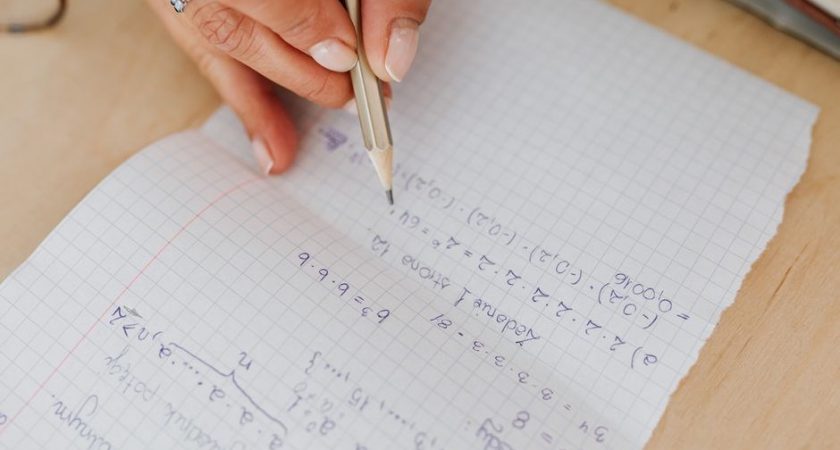
Overview of Year 6 Maths Reasoning Questions
Year 6 maths reasoning PDFs offer concise, answer‑keyed practice covering KS2 objectives. They feature diverse problem types—addition, fractions, geometry, logic—mirroring SATs style. Students can self‑check, track progress, and build confidence for exam day. Practice builds logical thinking and skills.!!
Key KS2 Objectives Covered in PDFs
Year 6 reasoning PDFs align with the KS2 curriculum, targeting core learning outcomes set by the Department for Education. They reinforce number sense, from basic arithmetic to advanced place‑value reasoning, and embed fractions, decimals and percentages through mixed‑type problems. Geometry and spatial reasoning tasks ask pupils to identify shapes, calculate perimeters and areas, and interpret two‑ and three‑dimensional figures. The word‑problem section develops the ability to translate everyday situations into mathematical language, while logical‑puzzle tasks strengthen deductive reasoning and pattern recognition. By covering these strands, the PDFs provide a comprehensive review mirroring KS2 SATs expectations, giving students a clear roadmap of required skills. The PDFs also cover measurement, including length, weight and capacity, and incorporate data handling with simple graphs and tables. They include mathematical language, encouraging precise terminology and symbols. Additionally, resources touch on calculators and technology, reflecting a modern maths approach. Each objective is supported by worked examples and practice questions, allowing pupils to apply concepts in varied contexts. The PDFs also include a section on estimation and rounding, encouraging approximation before exact calculations. They provide a glossary of key terms to reinforce language skills. Teachers can use the PDFs to plan revision sessions, focusing on weaker areas through formative assessment. The resources provide a scaffolded progression, starting with simple calculations and moving towards more complex reasoning tasks, ensuring pupils build confidence progressively. Each PDF includes a concise summary of strategies for tackling various question types, such as checking units, using estimation, and verifying answers for consistency, which helps pupils approach problems with confidence and precision.
Common Reasoning Question Types

Year 6 reasoning PDFs cover a spectrum of question types that align with KS2 SATs expectations. Common formats include arithmetic sequences, where pupils extend patterns using addition or subtraction, and place‑value challenges that ask for the largest or smallest number with a given property. Fraction and decimal tasks often require converting between forms, simplifying expressions, or comparing sizes. Percentage problems test conversion skills and the ability to calculate increases or decreases. Geometry questions ask for perimeter, area, or volume calculations and involve recognising angles, symmetry, or spatial relationships. Logical puzzles feature number grids, pattern recognition, and “find the missing number” sequences. Word problems translate real‑world scenarios into equations, using contextual clues to decide which operation is appropriate. Many questions are multi‑step, encouraging students to break down problems, write down assumptions, and verify results. PDFs also incorporate estimation and rounding, prompting pupils to check plausibility of answers. Each type is accompanied by a worked example, a brief strategy note, and an answer key, allowing self‑check and understanding of common pitfalls. This variety ensures pupils develop a balanced skill set, ready for diverse SATs challenges. Teachers can use the PDFs to create drills, reinforcing accuracy. Resources highlight misconceptions, such as misreading place‑value columns or incorrectly applying the distributive property. By practicing question types, students daily practice build resilience against trick questions deepen conceptual understanding beyond rote calculation. PDFs also include logical reasoning with visual patterns, encouraging pupils to identify symmetry and repetition in diagrams. This holistic approach ensures learners are proficient in calculations and adept at applying mathematical thinking to scenarios!!
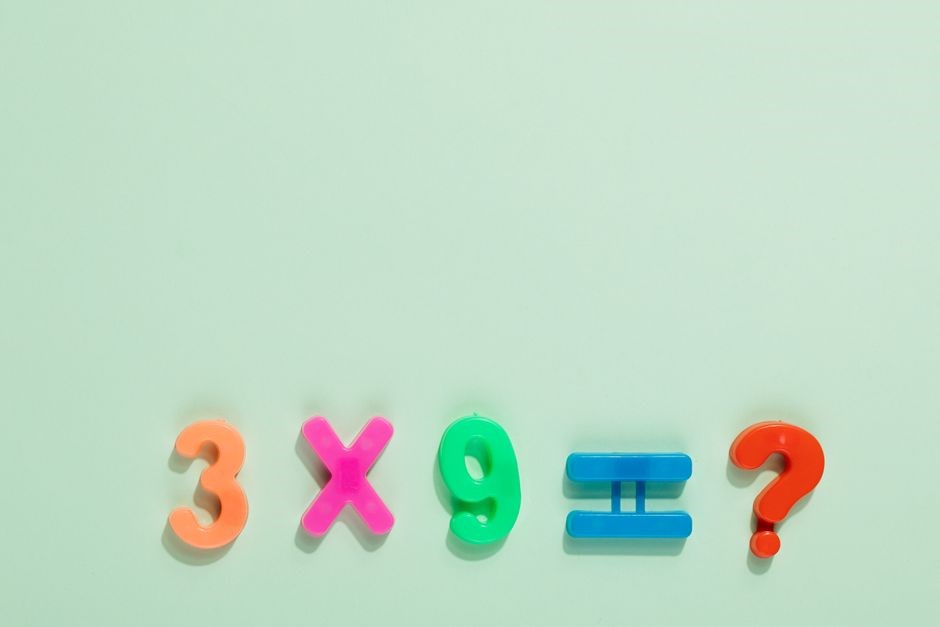
Importance of Practice for SATs Preparation

Consistent exposure to Year 6 reasoning PDFs is pivotal for SATs readiness. Regular practice transforms abstract concepts into automatic skills, reducing test anxiety and boosting confidence. By tackling a wide array of question types—arithmetic sequences, fractions, decimals, percentages, geometry, and logic puzzles—students internalise patterns and develop efficient strategies. Repeated problem‑solving sharpens mental calculation speed, essential for time‑constrained exams. Practice also reveals personal learning gaps; answer keys in PDFs enable immediate feedback, allowing pupils to correct misconceptions before they become ingrained. This self‑diagnostic loop encourages targeted revision, ensuring each student focuses on weak areas rather than wasting time on mastered skills. Moreover, familiarity with the SATs format—multiple‑choice, short answer, and word problems—reduces uncertainty, enabling students to allocate time wisely across sections. The PDFs’ structured progression, from simple to complex, mirrors the exam’s difficulty curve, preparing pupils for escalating challenge. Teachers can use practice logs to monitor improvement, set realistic goals, and celebrate milestones, fostering a growth mindset. Ultimately, disciplined practice with answer‑keyed resources cultivates resilience, precision, and a deep understanding of mathematical reasoning, all of which are indispensable for achieving a strong SATs outcome.

Resources for Downloading PDFs
Download Year 6 reasoning PDFs featuring 100 practice questions, answer keys, and printable worksheets. resources include quizzes, printable worksheets, and full 100‑question sets. Access them online, print, and use for SATs prep.All PDFs are free to download, printable, and include answer keys!! practice.!
Free Downloadable Workbooks with Answers
Students and teachers can access a range of free Year 6 reasoning workbooks that include full answer keys. These PDFs cover KS2 objectives such as place value, fractions, decimals, percentages, geometry, and logical reasoning. Each workbook contains 100 carefully designed problems that mirror the format and difficulty of the SATs. The answer sheets are provided in a separate file, allowing learners to check their work immediately and identify areas for improvement. The materials are downloadable in PDF format, printable, and can be used for both classroom and home study. They are updated regularly to reflect any changes in the curriculum, ensuring relevance for current exam specifications. Teachers can also use the workbooks to create targeted revision sessions, while parents can support their children’s learning at home. The resources are available for free on multiple educational websites, and no registration is required; Download now to give your Year 6 pupils a comprehensive, answer‑backed practice set that builds confidence and sharpens reasoning skills for the SATs.
These PDFs are designed to align with the national curriculum, ensuring that every question reinforces key concepts. Teachers can download the answer sheets separately, allowing them to assess student progress without revealing solutions during class. Parents can use printable sets to create a home‑study routine, while benefit from feedback. The materials are updated to reflect exam specifications, keeping practice relevant current Progress daily today now.

Interactive Online Quizzes with Immediate Feedback
Year 6 reasoning quizzes online offer instant scoring and detailed explanations for each answer. Students can test concepts such as place value, fractions, decimals, percentages, geometry, and logic. The platform records progress and tags each question to a KS2 objective, allowing teachers to track class performance. The quizzes are accessible on any device, ideal for classroom use and home study. With a library of over 200 ready‑made questions, learners can practice until they master the material. The feedback includes step‑by‑step solutions, helping students understand the reasoning behind correct answers. Start using these interactive tools today to boost confidence and readiness for the SATs.
In addition, the quizzes adapt to student performance, offering harder or easier questions based on previous answers. This adaptive learning ensures each student receives a personalized challenge level, preventing boredom or frustration. The immediate feedback loop encourages self‑assessment and promotes active learning. Students can review incorrect answers to reinforce learning. Teachers can embed quizzes into lesson plans, assign them as homework, or use them for formative assessment. By integrating these interactive quizzes into regular practice, Year 6 pupils develop critical thinking, problem‑solving skills, and confidence that will translate into higher SATs scores.
The resource includes a glossary of key terms, helping learners grasp mathematical vocabulary. Teachers can create custom quizzes by selecting specific topics, tailoring the difficulty to class needs. The platform’s analytics dashboard offers insights into common misconceptions, guiding targeted intervention. By combining these features, the interactive quizzes become a powerful tool for mastering Year 6 reasoning skills.
Printable Worksheets with 30 Sample Questions

These printable worksheets provide a focused set of 30 carefully curated reasoning questions that mirror the format and difficulty of the KS2 SATs. Each worksheet is designed for quick, self‑paced practice, allowing students to work independently or in small groups. The questions cover a spectrum of topics—place value, fractions, decimals, percentages, geometry, and logical reasoning—ensuring a well‑rounded review of core Year 6 concepts. The answers are supplied on the reverse side, complete with step‑by‑step explanations that help students understand the reasoning behind each solution. This immediate feedback loop reinforces learning and builds confidence. The worksheets are fully downloadable as PDFs, making them easy to print or share digitally. Teachers can use them for timed drills, formative assessment, or as a supplement to classroom instruction. Parents can also support home study by providing a structured, answer‑keyed resource that keeps pupils engaged and on track for the SATs.
Teachers can track progress by marking each worksheet with a simple rubric: correct, partially correct, or incorrect. This allows them to identify patterns of difficulty and tailor follow‑up lessons. For parents, the worksheets provide a clear snapshot of their child’s strengths and areas needing reinforcement. The PDF format also supports accessibility features such as screen‑reader compatibility, ensuring all learners can benefit from the resource. Use worksheets to tracks progress.
PDFs Containing 100 Practice Questions
These comprehensive PDFs deliver a full set of 100 Year 6 reasoning questions, each paired with a detailed answer key. Designed to emulate the structure of the KS2 SATs, the questions span arithmetic, fractions, decimals, percentages, geometry, and logical puzzles, ensuring a balanced review of all core topics. The layout is clean and printable, with clear numbering and ample space for students to write their solutions. Answers are provided on the reverse page, offering step‑by‑step explanations that help learners understand the underlying logic and correct any misconceptions. Teachers can use the PDFs for timed practice sessions, formative assessment, or as a resource for homework. Parents can download and print the sheets to support home study, tracking progress through the included answer sheets. The PDFs are fully accessible, supporting screen readers and high‑contrast modes, making them suitable for all learners. By working through the full set, students build confidence, sharpen problem‑solving skills, and gain familiarity with the exam format, giving them a solid foundation for the SATs.
Each PDF is formatted for easy printing and includes a printable answer sheet that can be used for self‑assessment or teacher marking. The questions are grouped by topic, allowing targeted revision sessions. Additionally, the PDFs include a brief guide on how to approach each type of problem, which is especially useful for students who need structured support. The resource is updated regularly to reflect any changes in the KS2 curriculum, ensuring relevance and accuracy. Download now to give your students a comprehensive, ready‑to‑use practice tool.

Structure of a Typical Year 6 Reasoning Test
Year 6 reasoning tests are divided into four sections: number & place value, fractions/decimals/percentages, geometry, and logic/word problems; Each section contains 10–12 questions, timed at 30 min, with an answer key for self‑checking. The PDF includes a timed practice mode and a printable answer sheet
Section 1: Number and Place Value
Year 6 pupils are challenged to master the fundamentals of place value, a cornerstone of the KS2 curriculum. The PDF presents a balanced mix of 12 questions that require students to identify the value of a digit in a multi‑digit number, round large numbers to the nearest thousand or hundred, and perform addition or subtraction with carrying or borrowing. For instance, one problem asks students to round 456,789 to the nearest thousand, while another requires them to determine the digit in the ten‑thousands place of 3,214,567. These tasks reinforce mental arithmetic and help learners recognise patterns in numbers.
Beyond basic operations, the section tests the ability to interpret number lines and convert between different numerical forms. Students may be asked to place 2,345,678 on a number line ranging from 0 to 10,000,000, or to rewrite 0.75 as a fraction in simplest form. Such exercises deepen understanding of how numbers relate to one another across scales. The answer key provides step‑by‑step solutions, enabling teachers and parents to identify common misconceptions and offer targeted support.
To encourage independent practice, the PDF includes a brief reflection prompt: “Explain why the digit in the hundreds place of 7,892,345 is 2.” This encourages students to articulate reasoning rather than merely compute. The section concludes with a quick self‑check quiz, allowing pupils to gauge their confidence before moving on to the next part of the test. Overall, this segment builds a solid foundation in number sense, essential for tackling more complex reasoning questions later in the SATs.
Teachers can use the optional “challenge mode” to extend practice: students solve the same problems but with time limits, simulating exam conditions. This helps develop speed and accuracy, key skills for the SATs.

Students are encouraged to discuss their strategies with peers, fostering collaborative problem‑solving and reinforcing conceptual understanding.
Finally, the PDF offers a printable “Answer Sheet” that aligns each question with its solution, making it easy to grade and review progress quickly.
Section 2: Fractions, Decimals, and Percentages
Year 6 reasoning PDFs focus on converting and comparing fractions, decimals, and percentages. The section contains 10 questions that ask students to rewrite ¾ as a decimal, convert 0.25 into a percentage, and compare ⅓ with 0.4. Students solve scaling problems such as “If ¾ cup of flour is needed for 4 servings, how much is required for 10 servings?” and “What percent of 200 is 50?” These tasks reinforce the relationship between the three number types and promote mental conversion skills. Each problem is paired with a detailed answer key that explains the reasoning steps, such as multiplying the numerator by 100 and dividing by the denominator to convert a fraction to a percentage. The PDF also includes a “quick check” section where pupils match fractions to their decimal equivalents, encouraging active recall and helping teachers spot common errors like confusing 0.5 with ½. A real‑world prompt asks, “If a store offers a 20% discount on a £45 item, what is the final price?” Students calculate the discount and subtract it from the original price, demonstrating everyday use of percentages. Teachers can extend practice with a “challenge worksheet” that adds constraints, such as “Convert 0.125 to a fraction and then to a percentage,” promoting higher‑order thinking for the SATs. Finally, a printable “Answer Sheet” lists each question number, the correct answer, and a brief explanation, enabling quick grading and review. This comprehensive resource equips learners with the confidence to tackle reasoning challenge, ensuring they excel in the SATs.
Section 3: Geometry and Spatial Reasoning
Geometry and spatial reasoning questions in Year 6 PDFs test students’ ability to identify shapes, calculate perimeters, and interpret spatial relationships. The section contains 12 problems that ask pupils to determine the perimeter of a rectangle with sides 7 cm and 9 cm, find the area of a right‑angled triangle with base 5 cm and height 12 cm, and recognise the symmetry of a regular hexagon. Students also solve problems that involve converting between units, such as “How many millimetres are in 3 centimetres?” and “If a square has a side of 4 inches, what is its area in square inches?” The PDF includes a “matching” exercise where learners pair a diagram with its correct name (e.g., a pentagon, a trapezium, a rhombus). A real‑world scenario asks, “A garden is shaped like a parallelogram with a base of 10 m and a height of 6 m. What is its area?” Students apply the formula for area of a parallelogram (base × height) to find 60 m². The resource also features a “spatial reasoning” puzzle that requires students to rotate a 3‑dimensional cube and identify the face that will be visible after a 90° turn. Each question is accompanied by a concise answer key that explains the reasoning steps, such as using the formula P = 2(a + b) for rectangles or A = ½bh for triangles. Teachers can use the “quick review” section to assess common misconceptions, like confusing area with perimeter. The PDF concludes with a printable “Answer Sheet” that lists each problem number, the correct answer, and a brief explanation, facilitating rapid marking and targeted feedback for the SATs. Additionally, the test includes a section on angles, where pupils calculate the missing angle in a triangle with two angles of 45° and 55°, and determine whether a given angle is acute, right, or obtuse. A diagram of a composite shape made of rectangles and triangles challenges students to compute the total area by breaking it into simpler parts. The PDF also offers a “visual estimation” task that asks students to estimate the perimeter of an irregular polygon before calculating it precisely, encouraging estimation skills that are valuable for the SATs. Finally, a “challenge” problem invites learners to design a simple house plan on graph paper, labeling each room’s dimensions and calculating the total floor area, thereby linking geometry to everyday life. The answer key provides step‑by‑step solutions, reinforcing the importance of methodical problem‑solving and clear notation. Teachers can adapt these questions for mixed‑ability groups by varying the complexity of the shapes or by introducing three‑dimensional solids such as cubes and cylinders, ensuring all pupils are challenged appropriately.
Section 4: Logical Puzzles and Word Problems
Year 6 reasoning PDFs feature 10 logical puzzles and 10 word‑problem questions that mirror the SATs format. A typical puzzle asks, “If a train travels 120 km in 2 h, how many kilometres will it cover in 5 h?” Students apply proportional reasoning to calculate 300 km. Another puzzle presents a sequence: 3, 6, 12, 24, … and asks for the 7th term, encouraging pattern recognition. Word problems include scenarios such as, “Mia has 48 marbles. She gives 1/4 to her friend and keeps the rest. How many does she keep?” The PDF supplies the answer 36 and explains the steps: 48 × ¾ = 36. A multi‑step problem asks, “A shop sells 5 pencils for £2.50. How many pencils can you buy for £12.50?” Students solve by setting up a proportion: 5 pencils / £2.50 = x / £12.50, yielding x = 25. The resource also includes a “logic grid” puzzle where pupils deduce relationships between five friends, their pets, and favourite colours. Each clue is written in a concise sentence, requiring deduction skills. A “budget” word problem asks, “A family spends £180 on groceries and £120 on utilities in a month. What is their total monthly expenditure?” The answer key shows £300. The PDF’s answer sheet provides a brief justification for each solution, such as “Use the formula total = sum of individual expenses.” Teachers can use the “check‑your‑work” section to discuss common errors, like misreading fractions or forgetting to convert units. The format encourages students to read carefully, identify key data, and apply appropriate mathematical operations. By practising these puzzles and word problems, pupils strengthen logical reasoning, numerical fluency, and the ability to translate real‑world situations into solvable equations, all essential skills for the KS2 SATs.

Students discuss solutions peers!!!